

(originally posted (with some additional pieces specifically for those working cross-culturally) on our counseling center site)
Be joyful though you have considered all the facts.” – Wendell Berry (1973)
When things are going well, when sunlight sparkles on the sea and ministry feels deeply fulfilling, gratitude comes easily. The list of good things almost writes itself, and thanking God for them feels natural. But there are other moments: right after an unwanted evacuation, or a painful conversation with a teammate, when being told to “count your blessings” can feel shallow, even dismissive. Perhaps gratitude is better thought of as a spiritual discipline, one that builds capacity and helps us move through painful seasons with more resilience. But how do we develop gratitude as a natural part of our responses in all seasons of our life and work?
Gratitude is…
Psychologist Robert Emmons describes gratitude in two parts:
- Noticing that something is good
- Recognizing that goodness comes from beyond ourselves (whether from other people, creation, or God) (Emmons, 2007)
It feels encouraging to me to note that in this definition of gratitude, we aren’t required to feel grateful. Emmons says that the goodness we’re looking for comes from our relationships, as an outward, intentional looking for goodness.
Benedictine monk Brother David Steindl-Rast, the “grandfather of gratitude,” adds another helpful distinction: we can’t honestly be grateful for everything that happens to us, but we can be grateful in every moment. Why? He believes that each moment holds some opportunity to enjoy, learn, serve, or respond (Steindl-Rast, 2013). What a beautiful thought!
A friend once told me how this played out when she moved to Crimea shortly after the fall of the Berlin Wall. After multiple flights, the airline lost her luggage, with an 18-hour sleeper train and a trek across town still ahead. She was frustrated, until she realized the bags would be delivered to her door, sparing her from hauling suitcases across checkpoints and broken sidewalks. She wasn’t grateful for the lost luggage, but she stopped, looked, and found a gift in the moment. She traveled lighter than ever and, with a laugh, started hoping they’d lose it again!
Practice Makes Progress
Neuroscientist Alex Korb (2015) explains that how we feel depends not only on our circumstances but on what we pay attention to. We tend to notice things that confirm what we’re already feeling. Low mood pulls attention toward whatever seems negative. Those negative things seem to feel more important. Alternatively, deliberately noticing something we truly appreciate gently redirects it, and that small shift can set off a positive cycle he calls an “upward spiral.” By practicing regular gratitude for example, we are working to train our attention towards the good in our life. And by pairing this with self-compassion and forgiveness, we leave room for grief and anger rather than pushing them away. We aren’t denying the hard, but are trying to acknowledge that there’s more to the story.

A co-worker shared about a time when she studied abroad in Korea and lived in the dorms. Unexpectedly, there was no kitchen access (save a small microwave), and no provided meals from the university. She quickly tired of the cheap ramen her fellow students lived on, and was feeling pretty discouraged. It significantly contributed to her difficulty adjusting (because this specific issue kept coming up 3x a day!) However, as she found a new church community, she started getting invited to people’s homes for dinner (and of course always took them up on it.) She learned to give great thanks not only for the genuine friendships she formed, but for each warm homemade meal she received! Thus began her “upward spiral” that ultimately led this to become a positive memory for her to share years later.
What Gratitude Is Not
While this deliberate practice can produce an upward spiral that lifts our spirits in many ways, it should be clear that gratitude will not cure burnout or depression (at least not on its own.) Pushing others to smile through their pain, or to accept blame for their suffering, is toxic positivity. So is the “at least” list: “At least you have a place to stay.” “At least it wasn’t worse.” Statements like these rush past sorrow instead of making room for it, and as Brené Brown, PhD, LMSW, points out in this short video on empathy, they rarely help.
The alternative isn’t to stop giving thanks. Scripture invites us to “give thanks in all circumstances” (1 Thessalonians 5:18, NIV), but it never asks us to call a loss good or a wound fine. We can lament what is broken and, in the same breath, notice what is still tender, true, and kind. The gratitude we’re talking about here doesn’t erase sorrow; it interrupts it. It opens a window in a room that grief has sealed shut, and over time it tends to make space for the fruit of the Spirit: joy, peace, patience, kindness, and gentleness (Galatians 5:22–23, NIV).
That said, if you’re in a truly dark season, please know that practicing gratitude (while a beautiful spiritual discipline that I think is at the heart of much of our faith) should not replace professional help we might need. If you’re not sure when to seek help:
- Notice signs that you need more support. Persistent low mood, loss of interest in what you once enjoyed, changes in sleep or appetite, withdrawal, feeling hopeless, or any thoughts of self-harm are reasons to reach out to a counselor (you can ask us about availability here), doctor, or your member care team.
- Please don’t measure yourself by how grateful you feel. If you can’t summon thankfulness, that is not a spiritual failure. You may simply be tired, grieving, or depleted.
Let’s Start Together
If you don’t already have a daily gratitude practice, let me offer some small steps to try over the next month (in tune with Father David Steindl-Rast’s work):
1. Stop and look. Slow down, put your phone away, and really look around you. What good things have you been too distracted to see?
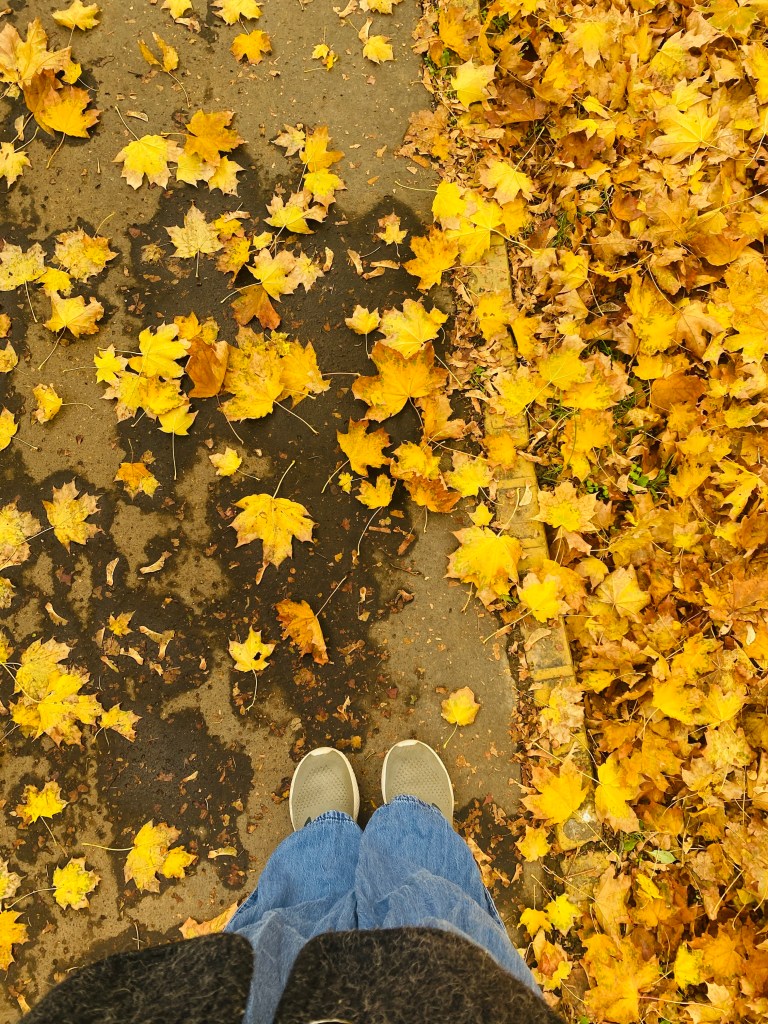
2. Savor. Linger over something small each day this week: autumn leaves, a child’s smile, good coffee, the sea glinting at twilight.
3. Go and say thank you. Make it concrete, whether in a journal, a short note, or out loud to someone near you. Don’t just say what you’re thankful for; say why it matters to you.
If you want something a little longer, try a savoring walk: twenty minutes alone outside each day for a week, noticing and fully taking in as many pleasant things as you can, perhaps on a different route each day (Greater Good Science Center, n.d.).
And finally, I’ll leave you with a blessing, because this is not simple, fluffy work. So many of you are doing the hard work of cross-cultural living where the fruit of your labor is far from clear. You are persisting, looking for joy in physically and spiritually barren lands, and that is no small feat. May you be blessed, dear sojourner, as you take each intentional step into this day, gratefully.
A Blessing for you, Learning to be Grateful
Blessed are you, learning to be grateful.
For you in seasons where it comes easily,
As you gaze into the sunshine and fruit of a beautiful life season.
May you be intentional to name each gift you see in front of you.
And may it carry you on into the seasons when you’ll need it again.
Blessed are you, learning to be grateful in the storm.
When everything is wrong, hurting, and so dark.
May you find the spiritual discipline of naming a simple goodness around you
Becomes a small window of light while you grieve.
Blessed are you, learning to be grateful.
May your honest practice of this gift of gratitude
Spiral your heart upwards,
Always closer to the Giver of Life.


As I was reading this, I thought of my granddaughter. She is 32-years-old, married, and mother of two litte girls, 3 and 1. She was recently diagnosed with stage 4 liver and colon cancer. As she undergoes chemotherapy, this is a good encouragement for her. Thank you for all you do!
LikeLike